
Surfing in India? Here’s Everything You Need to Know
Updated: Mar 27
Yes, you absolutely can surf in India. And no, it’s not just a bucket-list activity for backpackers or tourists.
India has over 7,500 km of coastline, and much of it offers solid surfing potential for beginners and intermediate surfers alike. From mellow beach breaks to punchy breaks, there’s a surprising amount of variety if you know where (and when) to look.
We've surfed across India over the last few years and here is everything you need to know about surfing in India from our personal experience and from our members' feedback.
Where Can You Surf in India?
India has two main coastlines: the east coast along the Bay of Bengal and the west coast along the Arabian Sea. And within these regions, you'll find surf towns with slowly growing local communities, surf schools, and an emerging surf culture that blends tradition with modern outdoor adventure.
Here are a few well-known (and beginner-friendly) surf spots:
Mulki, Karnataka : Often considered the birthplace of India’s surf scene or sometimes referred to as the surf capital of India, Mulki offers gentle waves and beach breaks, ideal for learning, especially for beginners (and non swimmers). With long stretches of clean sandy beaches and a calm vibe, it has become a go-to for first-timers. A ton of content on instagram is also fueling the surf tourism. There are of course other places near Mulki that offer surfing such as Udupi & Kodebengere. Check out our other blogs for Surfing in Karnataka.

Varkala, Kerala : A laid-back cliffside town with consistent waves and a peaceful spiritual vibe. Surfers can enjoy long rolling waves perfect for beginners (and non swimmers), and the sunset views are simply unbeatable.
Varkala is also known for it's surf community, it's arguably one of the best surf communities in India. Depending on the season, Varkala offers some great waves for intermediate surfers.
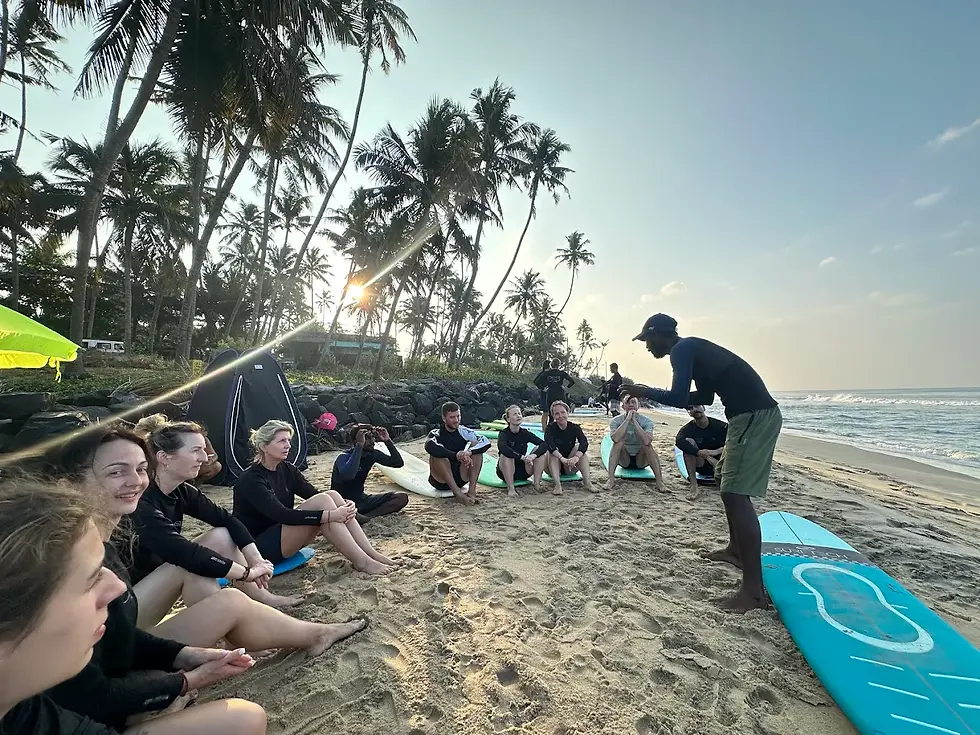
Mahabalipuram (Mahabs), Tamil Nadu : A coastal town with ancient temples and a thriving surf culture. Also known for it's powerful waves, Asia's surf championship was held here in 2025. You can spot a surfboard outside most of the houses in Mahabs. Popular for it's point break, it's perfect for intermediate surfers in the season. The white waters are also great for learners and beginners.
Mumu Surf School is one of the oldest surf schools in Mahabs (And Mumu himself an OG surfer).

Pondicherry & Auroville : Home to Serenity Beach, this area has a tight-knit surf community and plenty of places to practice. You can surf anytime during the year in Pondicherry, it's perfect for beginners and non swimmers too. Depending on the season, the rides here are usually long and smooth. Cafes, workshops, and a good dose of offbeat charm (The like whole auroville community) make it a must-visit. Check out our blog to see the best places to eat in Pondicherry after a surf. Click here to see the best surf schools in Pondicherry

Surfing on Serenity beach near Pondicherry Goa : While mostly known for its party scene, spots like Ashwem, Morjim & Agonda offer seasonal surf windows. Though not consistent year-round, they can surprise you during the right months. Your take away - Goa has waves!
Kovalam (Covelong), Chennai: Home to some of the oldest surf schools in the country, Kovalam offers the perfect waves for beginners and intermediates alike.
There is a whole list of places in India that you can surf. Best to check with the locals before you plan.
What Are the Best Seasons to Surf in India?
India’s surf seasons are dictated by the monsoons:
West Coast (Karnataka, Goa, Kerala): October to April is the sweet spot. This is post-monsoon when the seas calm down and winds are favourable. The perfect season for beginners would be - Nov to Feb.
East Coast (Tamil Nadu, Pondy): July to January is prime time. While the west is rough during the SW monsoon, the east is surprisingly surfable.
Do You Need to Be a Strong Swimmer?
You don’t need to be Michael Phelps, but being a confident swimmer helps a lot. Else choose a breach break like Mulki, Varkala or Pondicherry where the water is a lot more shallow & easy for non swimmer beginners. Btw, you can surf as a non-swimmer too.
If you are a swimmer, then you should be comfortable floating, treading water, and being knocked around a bit by waves. If you can do that, you’re already halfway there.
Treading water is an underrated skill, especially for those wanting to transition to surfing in the ocean. Check out our treading water workshops to get you confident in the water.
What Does a Lesson Cost?
Surf lessons in India are surprisingly affordable. A single 1-hour or 1.5-hour session will cost between ₹1200 to ₹2,500. These usually include board rental, to & fro boat ride or the rickshaw ride to the surf spot and coaching. Many schools offer 3-day or week-long packages that bring down the per-session price. Best to check the courses from the surf schools along with the packages that include stay.
Is Surfing Safe in India?
Yes, if you go with a good surf school. Most beaches used for surfing are relatively safe with low currents, shallow waters and instructors are well-trained in spotting risks (check for ISA certification). Most of the instructors would have done their lifeguard training as well. Of course, like any ocean activity, listening to your guide and respecting the sea is key.
Final Thought
If you’ve been curious about surfing in India, don’t wait for a trip to Bali. Start where you are. The waves may be smaller, but the vibe is warm and welcoming. The Indian surf community is still small, which means every new surfer helps grow something beautiful.


Comments